
Das Maritime Liederbuch
The story of my dad's lockdown project and how I got roped (sailing pun intended) into it
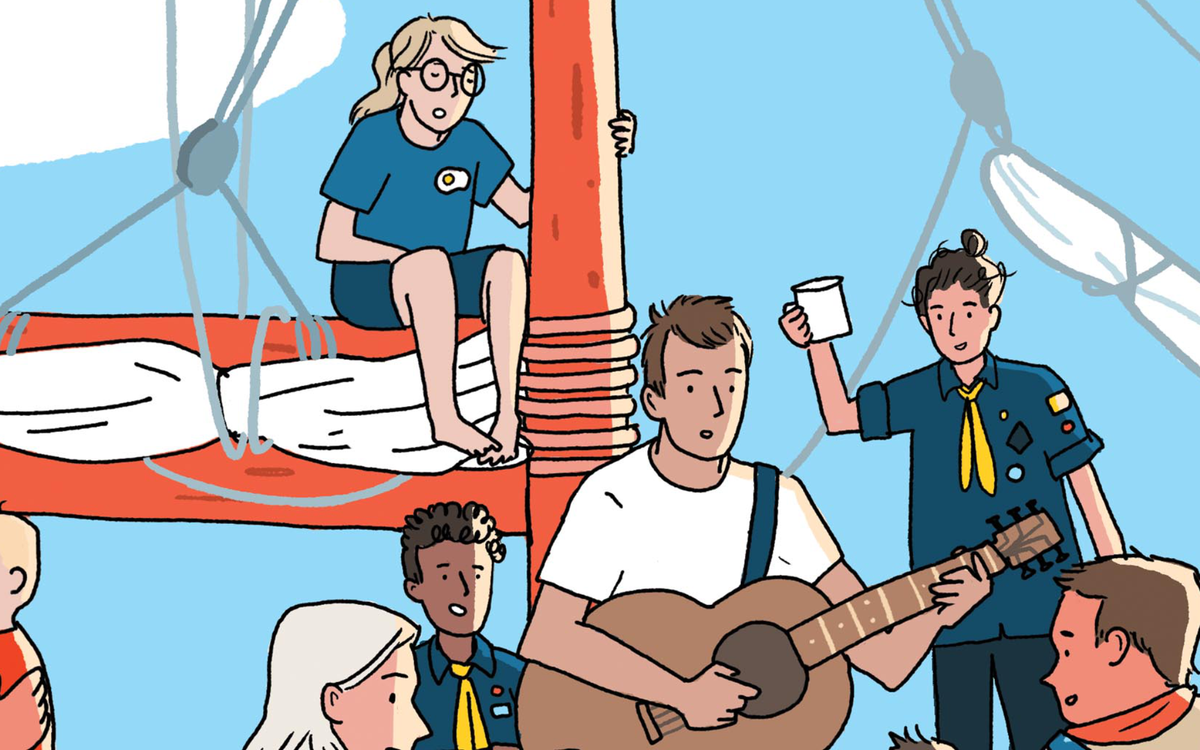
In the first lockdown in 2020, I found myself recruited by my dad for his passion project: to make a songbook. We worked on this together for over a year, and the book was eventually published - but I've never shared anything about it online until now.
It's not that I didn't want to share it with other people. It's more that until very recently this book has had a lot of complicated feelings heaped onto it and it was easier to just not think about it at all. Here's your warning: this post will include grief. If that is not something you want to read about, leave now!
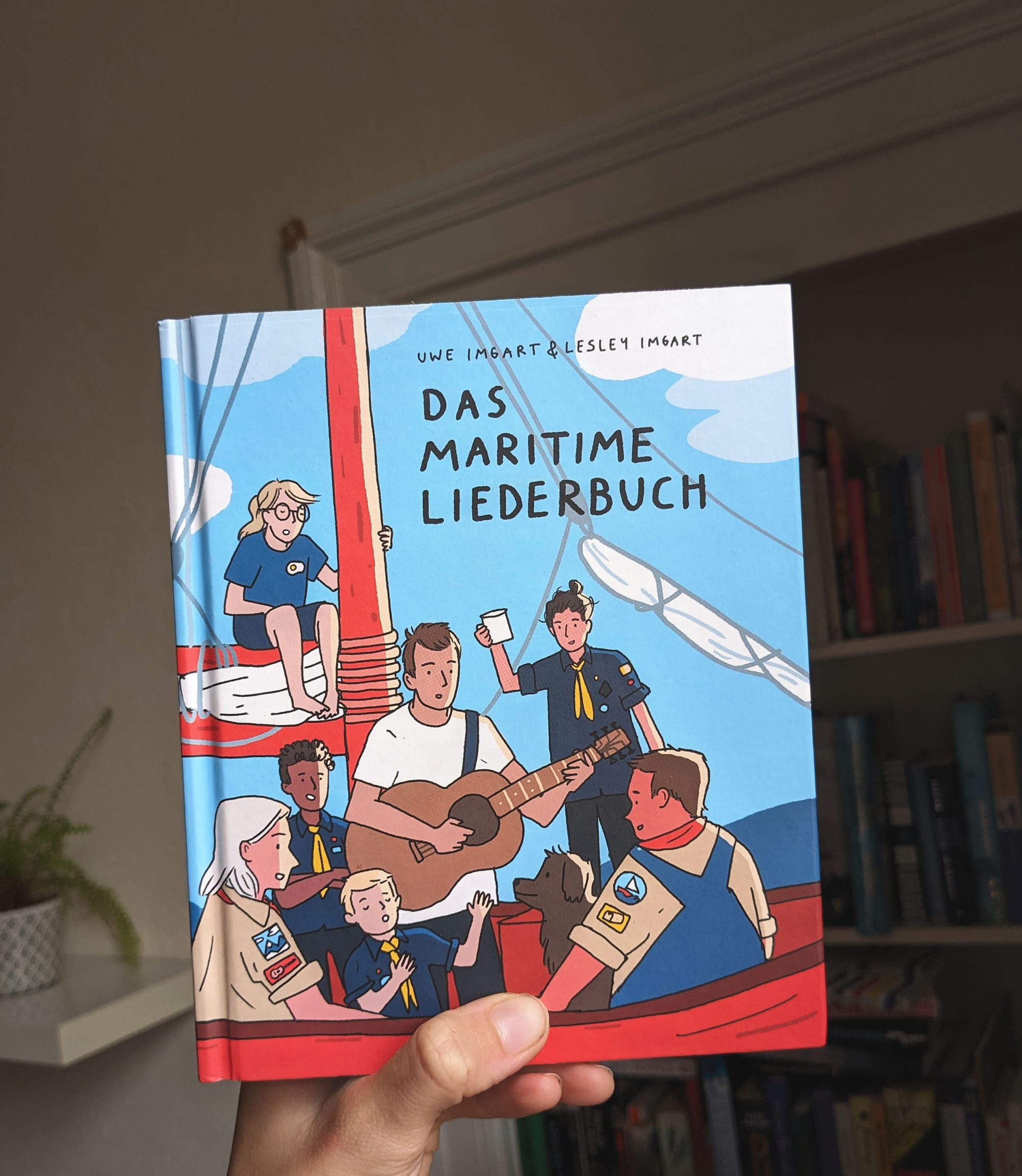
I can't quite remember when exactly we started working on this book. It started out, I'm pretty sure, with my dad pitching an idea to me on the phone: He really wanted a printed collection of songs about the sea, specifically one that he could use aboard the Mytilus.
There are two things I need to explain about my dad: his love for, firstly, music, and secondly, an old ship.
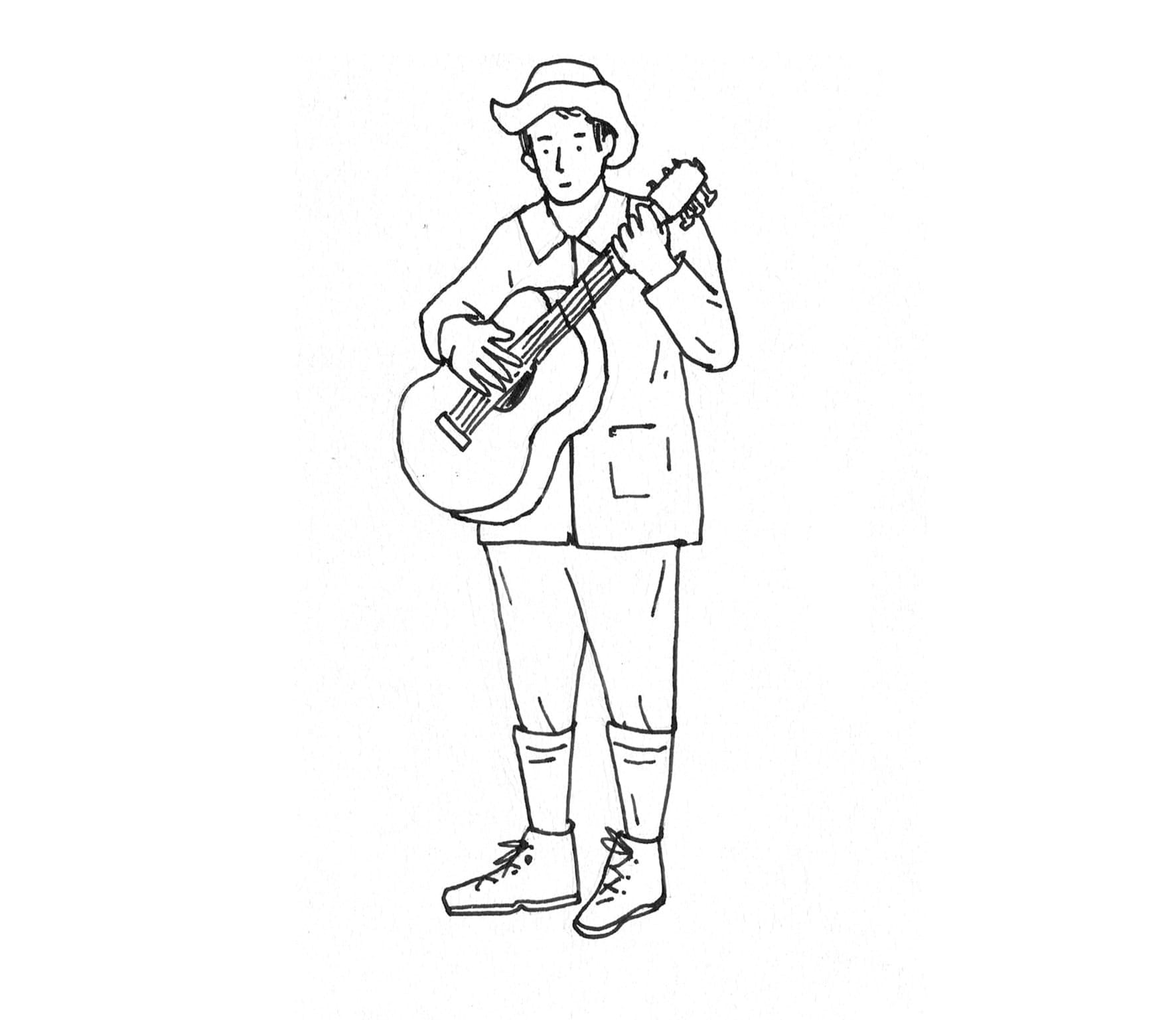
Music perhaps was one of my dad's greatest loves. Like children everywhere on this planet and throughout history, I grew up believing that what my family did was the way every family did things. So, it is only now that I see that it is probably not entirely usual that I essentially grew up with a live-in bard. Some of my earliest memories are of my dad sitting at the foot of the bunk bed that my sister and I slept in when we were very little, playing lullabies for us. As I grew up, his guitar-playing was simply an unvarying constant in the house. Having taught himself how to play as a teenager, he never stopped working to improve. He took singing lessons, bought books on fingerpicking technique, and learned new songs. On a plane journey to New York our family was introduced to Game of Thrones via the built-in screens, and within days of us returning home he'd mastered the theme music.
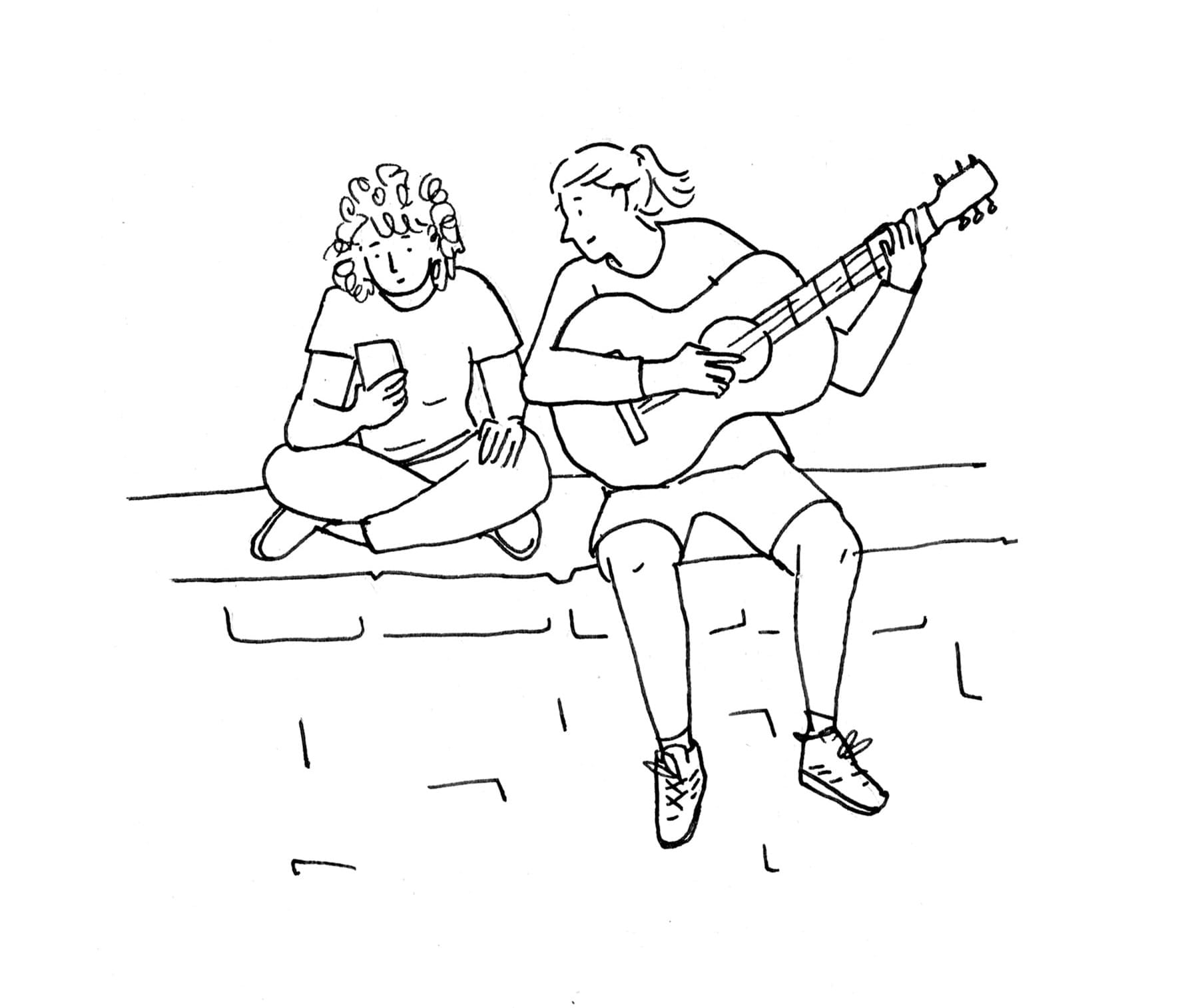
Was his consistency and earnestness in his pursuit extremely impressive? Hell yeah. Was it also sometimes annoying or bewildering to the rest of the family that he chose to shut himself in his room to play guitar for lengthy stretches of time? Yeah, absolutely. He could be single-minded and disciplined to a fault - for example, when I hesitantly asked if he'd teach me a few chords on the guitar when I was maybe 15, he couldn't comprehend why I couldn't commit to a rigorous routine to become really good at it. We argued over how hard I found it, and my guitar-playing never took off. I think I was always so intimidated by how dedicated he was that I saw no point in even trying - how could I ever be as diligent, as hard-working? Of course, it's only now that I see that I am very much capable of working hard, I simply applied it to something else (drawing and writing), and that it's totally ok to do things rather badly and for fun (I can play Titanium by Sia on the guitar).

The ship, then.
The Mytilus is a traditional sailing ship owned by a charity that takes youth and scout groups on voyages. My dad had been working with them for many years. My younger sister and I sometimes joked that he seemed to love that bloody boat more than us. Something always needed mending, painting, epoxy-ing... Hazy memories of me as a teenager, tagging along, reluctantly carrying this box or that up to the ship, moored for the winter in some huge boat-warehouse (that's almost certainly not the correct word) in Hamburg. Waiting on the pier in the rain. In the winter, our basement was filled with boxes and boxes of ropes.
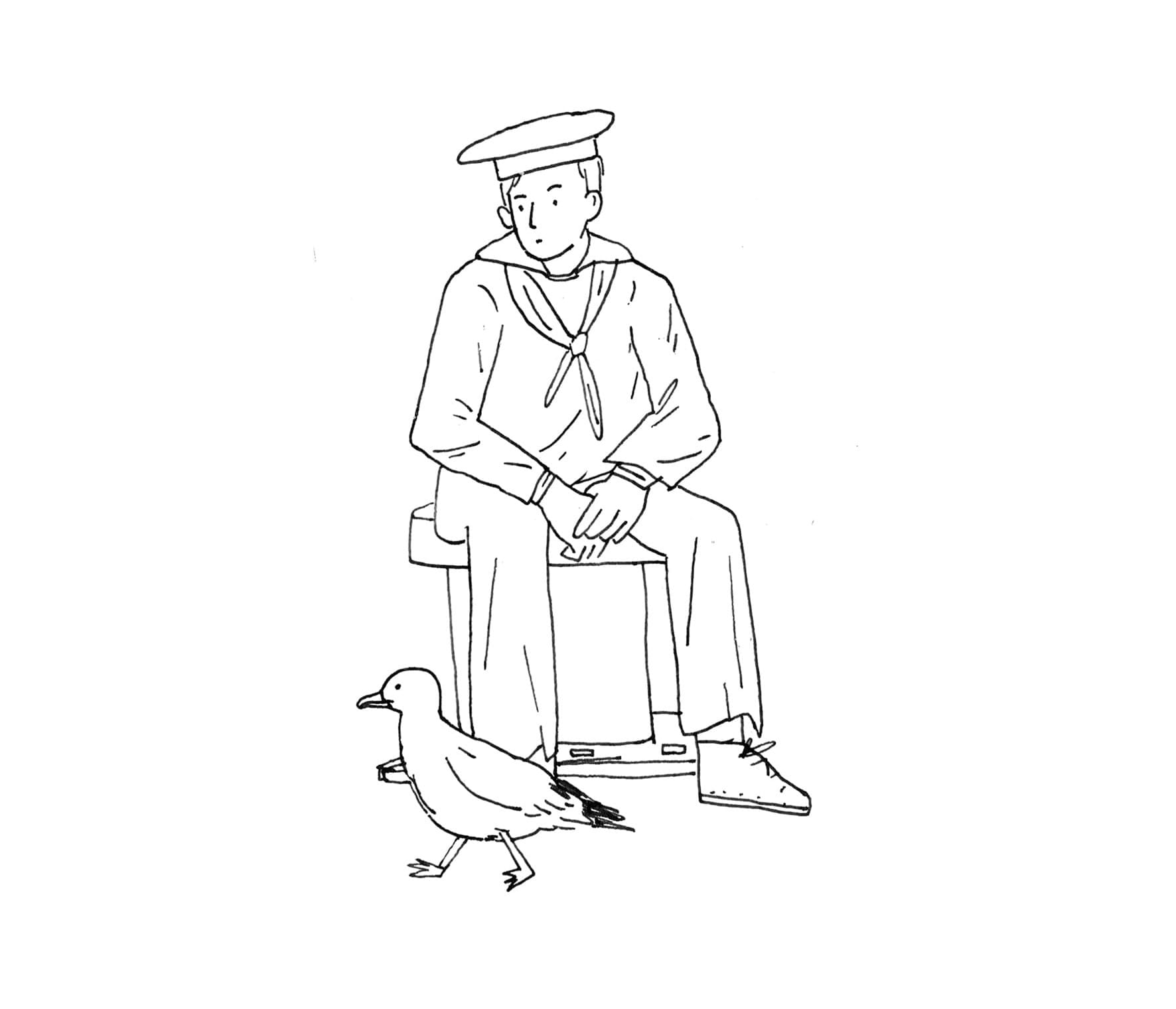
He had convinced me, once, to tag along for a two or three night trip, just down the river Elbe, when the crew were testing the ship out after the winter. I found that it was like camping, just on the water. I slept in a sleeping bag in a small bunk bed, I wore thermals because it was freezing cold on deck, meals were basic but tasted amazing because of the physical work I was doing in the day. I was terribly seasick and did not particularly want to repeat the experience. I love camping; I'll happily walk for miles up a mountain and sleep - and this is crucial - on the solid ground somewhere. I don't know if it made him sad that I never came along again. I never got to ask him.
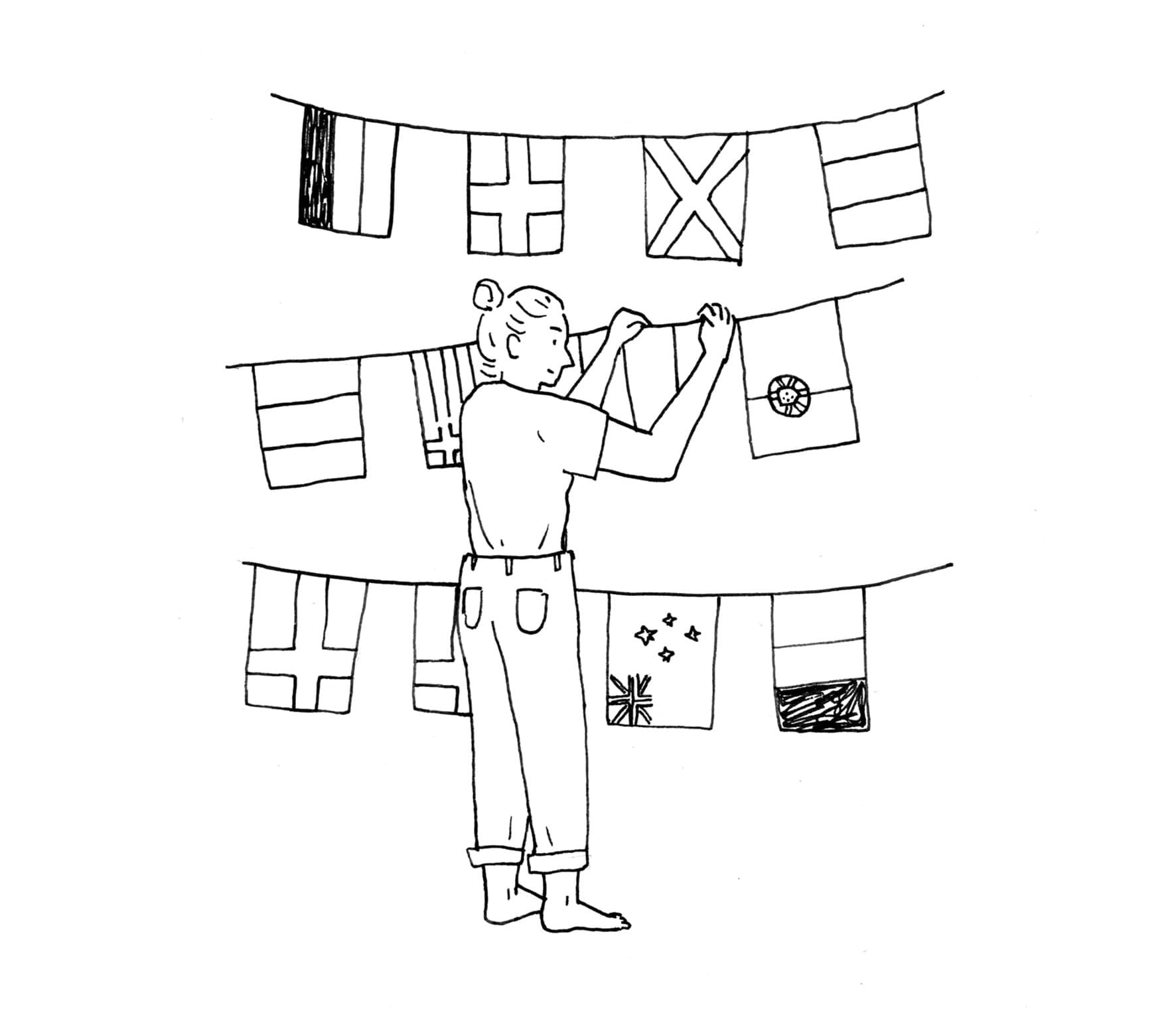
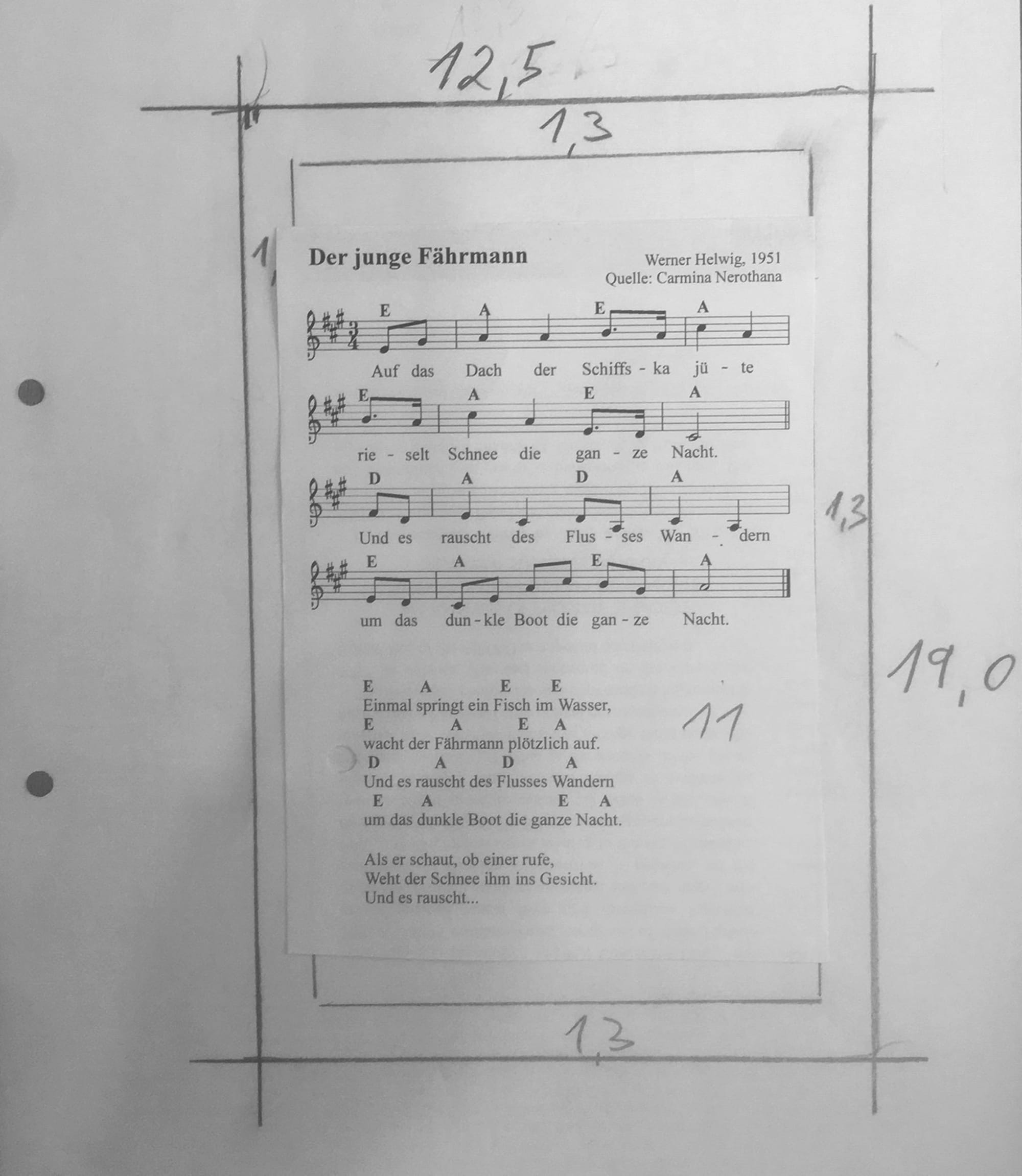
In the evenings on the ship, they played guitar and sang. This is where this songbook would come in: he had the fanciful idea of designing a book to fit the exact measurements of the Mytilus' book storage compartment below deck. This sentence alone, I believe, sums up my father and his way of thinking perfectly. He saw a problem (that there was no book containing the songs he wanted to have on board this ship) - and suggested a solution (to "just" make on himself) - that he would pursue stubbornly with no care for any obstacles in his way.
One of the ways in which my dad's love for music is evidenced permanently is in his vast collection of sheet music. If he liked a song, he would either track down the sheet music for it, or he'd write it himself, using software he'd found online. He loved tracking down songs and preserving them. I think it suited him very well - it utilised his very specific skill set best: reading and writing music; an obsessive interest in the origin and language of a song; a sense of duty; organisation and care to do things properly; and having the generosity to share his work.
On the phone in 2020 (him: at home in Germany with my mum, me: in a shared flat in Leith) he explained to me that he'd already spent years gathering a lot of these songs, and that he'd found a publisher in Hamburg willing to run a small print run of a collection of them. But he wondered if I could help him - could I draw a book cover? In fact, could I use some fancy software I had to put the entire book together? And maybe help sending some emails in English?
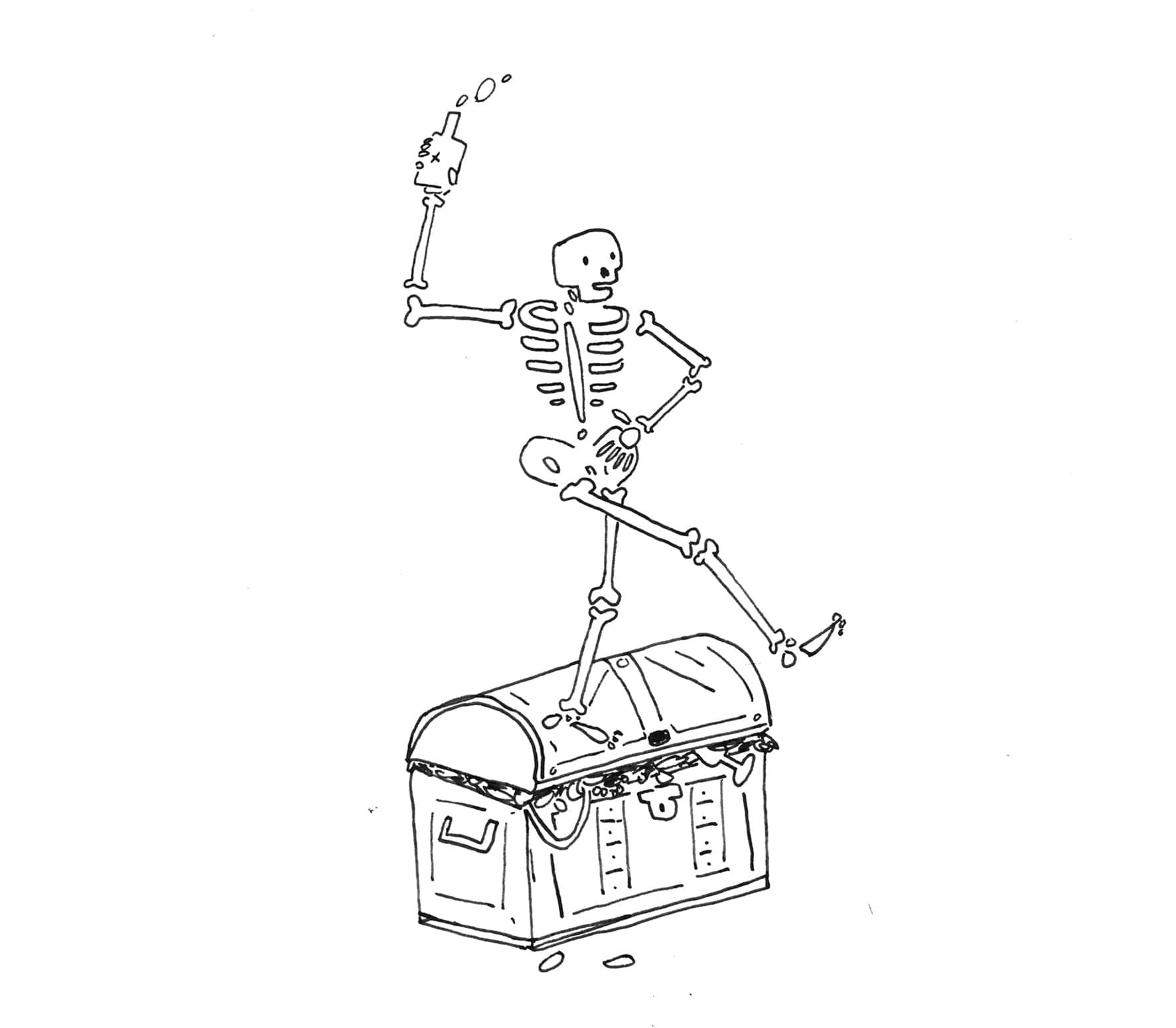
Soon, it turned out that the scope of all this was way more ambitious than anything I'd ever done myself before. In fact, in the following months, I came to curse my involvement more than once. After all, it wasn't me that wanted to do this - I was doing this 100% out of love, and what thanks did I get? An email from my dad telling me that I'd once again drawn the ropes on the ship wrong?! Of course I didn't know how to draw an accurate illustration of a historic ship. Of course I didn't know how to properly lay out a book for print in InDesign. Of course I was not thrilled to be chasing the contact details of some random Scottish folk singer so I could email his family to ask if we could maybe include one of his songs in this stupid project.
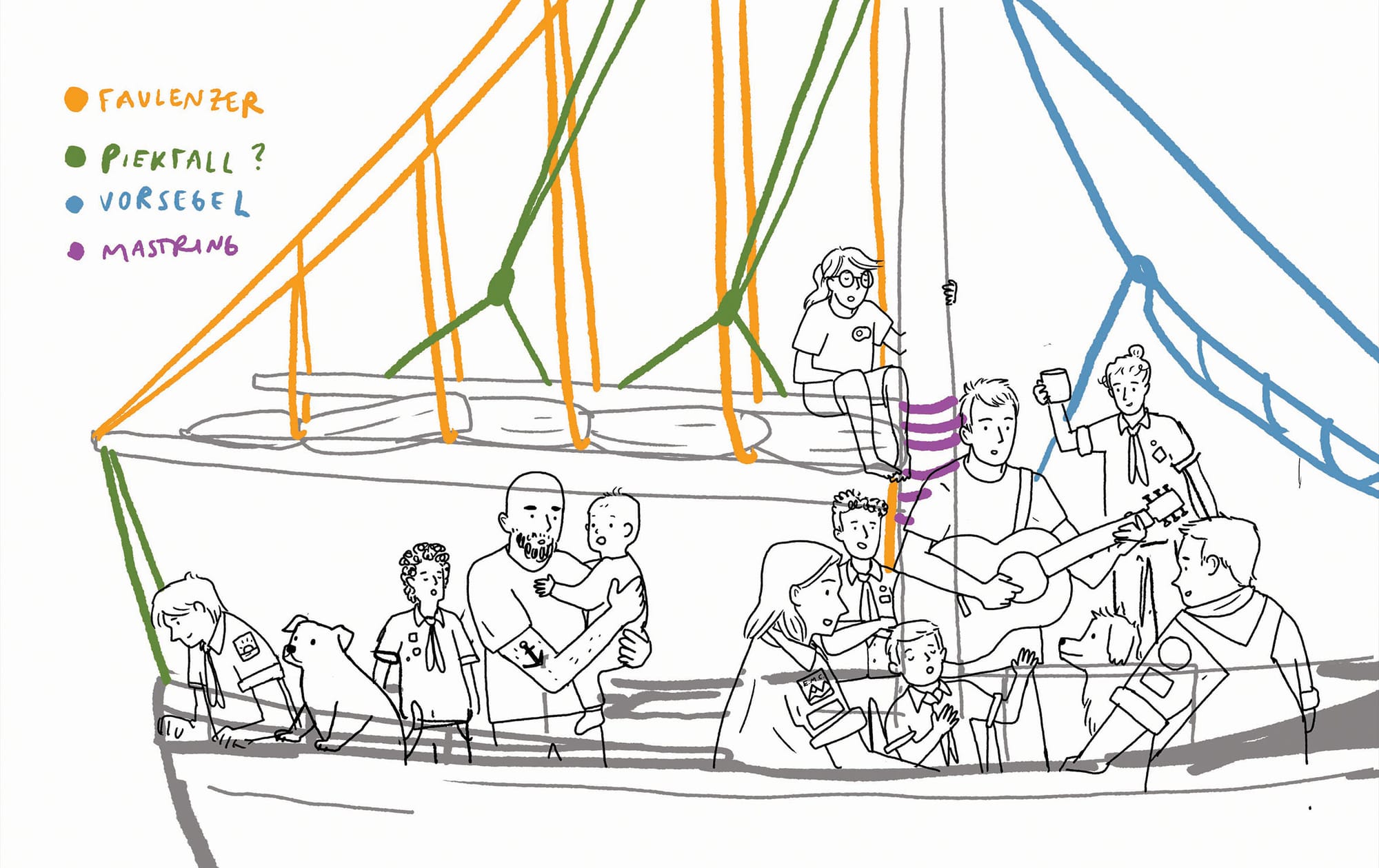
But of course, now, all of that has faded away, and with 20/20 hindsight I can say that a) I didn't have anything better to do anyway (since this was lockdown), b) doing this project taught me how to use InDesign, which I then used to make all of my self-published books, and c) well, as hinted at before, this book turned out to be the last thing we did together, and for this I am grateful.
Throughout 2020 and into 2021, I supplied a front and back cover, illustrations for each chapter plus spot illustrations which the aloof but ultimately kind art director (my dad) eventually approved. I assembled all the music, plus my dad's annotations, in InDesign (often swapping these out just as I thought I'd finished because he'd made an update here or there!).
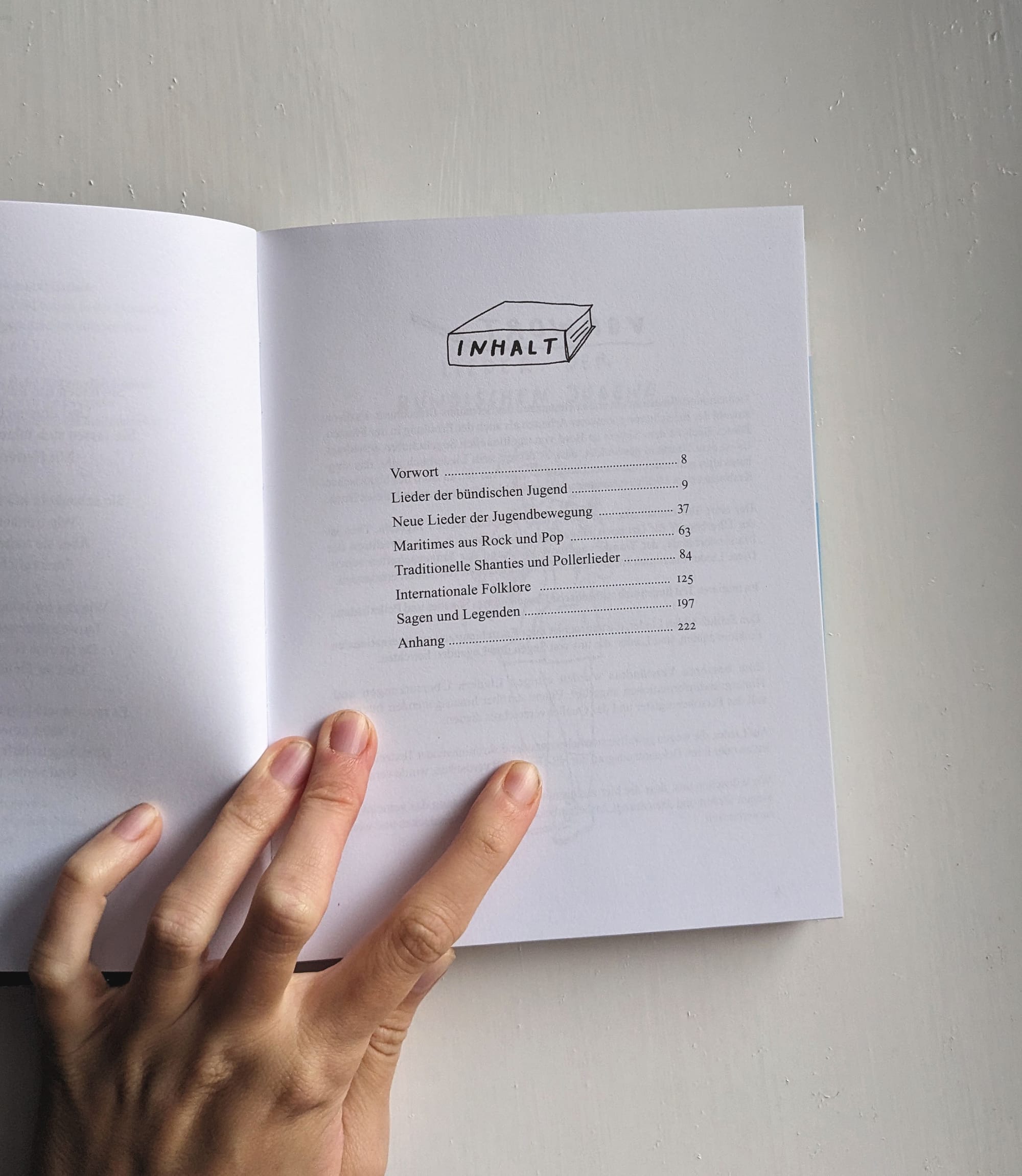
We were making good progress when my dad's cancer returned in March 2021. Even as his health deteriorated, we didn't stop. Although I helped research, edit, and proof-read the book, I have to admit that I was a lot less concerned with the content than my dad - I mostly just wanted to deliver it. So it is only now that I can appreciate the well-researched annotations everywhere in the book. My dad took care to provide explanations of the more obscure seafaring terms, translate Greek and Russian lyrics, and to point out very important facts such as that What to Do with a Drunken Sailor? may have been first printed in 1891 under that name, but the melody had been published in 1824-1825 in Cole's Selection of Favourite Cotillions already and is actually based on the traditional Irish song Óró, sé do bheatha 'bhaile, a rebel song about Bonnie Prince Charlie.
His sense of humour, dry but definitely a bit cheeky, shines through on occasion. On "The Wellerman", he wrote:
On the 27th of December 2020, the song was uploaded to the internet short video platform Tik Tok. Its"enormous potential for engagement" (Frankfurter Allgemeine) during the Covid-19 lockdown led to numerous people adding their own voices within just a few days, and the video garnered millions of views within two weeks. Apparently, young people suffering under the social distancing restrictions were able to emotionally identify with the whalers far from civilisation.
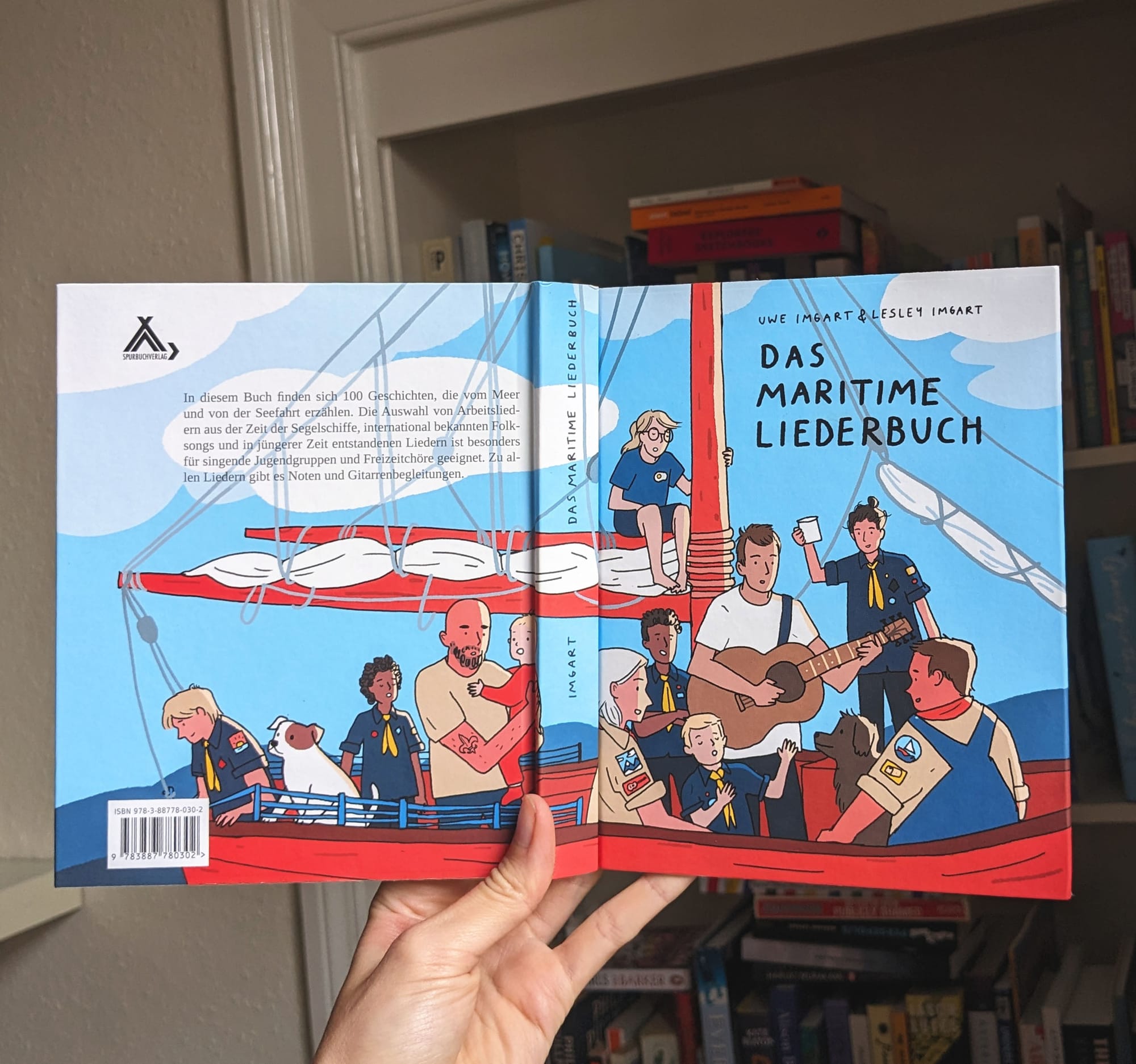
The book was finally published shortly after my father's passing. In fact, one of the first emails I sent after his death was to the publisher, to ask whether we could add a dedication at the beginning. I knew how important this book had been to him. The fact he never got to hold it in his hands continues to make me a confusing mixture of angry and sad.
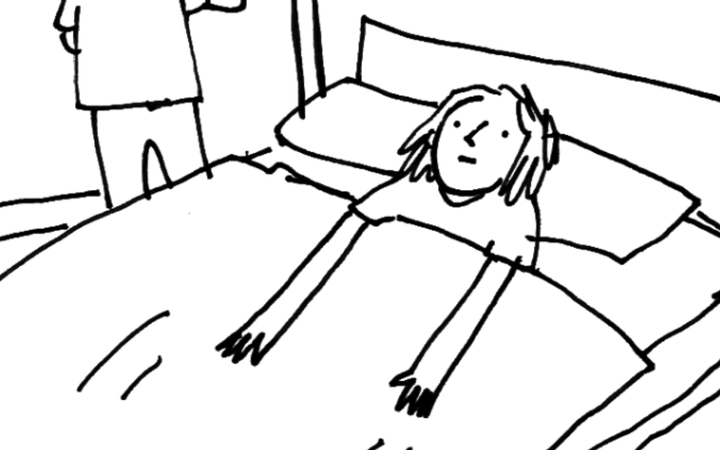
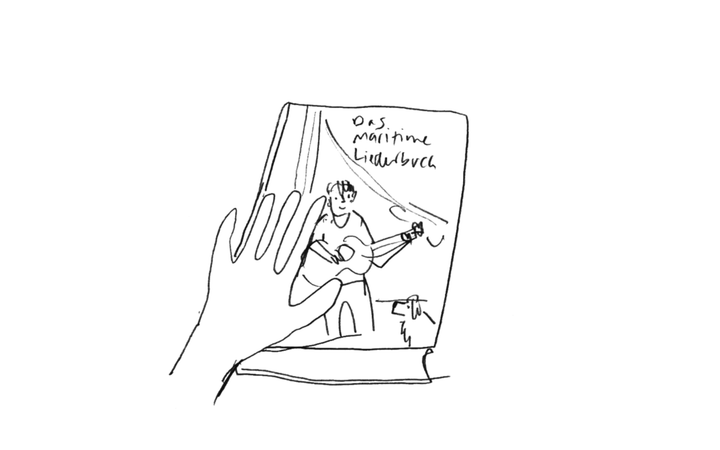
I remember being at home in Edinburgh just weeks after the funeral and receiving a parcel containing the proof copies for the book from the publisher. I learned that "bittersweet" is a pretty wide spectrum and I was firmly sitting on the "bitter" side of things, and for a long while, too. Normally I wouldn't hesitate to share any drawings I'd done for any professional or personal work on my website and on social media. But doing so with this book was simply was an insurmountable task.
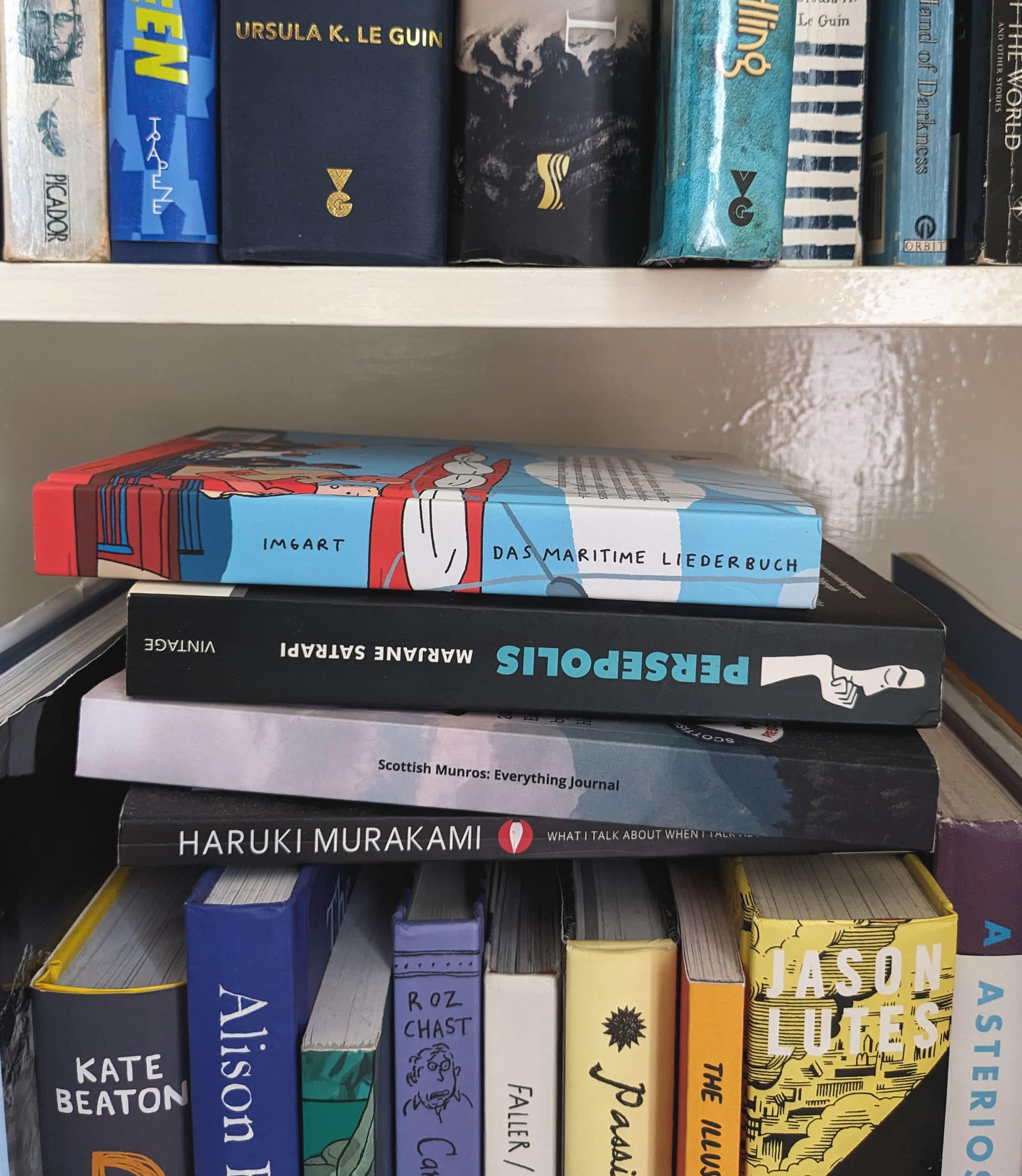
I realise that it would of course have been possibly to simply share some images of the book without writing this whole complicated narrative down, and I realise, too, that in being unable to do that I am my father's daughter. I know how I want things to be done, and I believe that it's worth taking the time to do them properly.
It's a cheesy thing to say but this book really is more than just a collection of some fairly obscure songs. It's my dad's legacy - combining his love for music, a ship, and me. And it's also a reminder that you really can make any strange dream a reality if you are ambitious enough.
You can purchase a copy of the book from the German publisher Spurbuchverlag here:


I was partly inspired to finish this post (which had been sitting in my drafts for the last year or two) by reading the book Death of an Ordinary Man by Sarah Perry.
Heave away!
L x

Comments ()